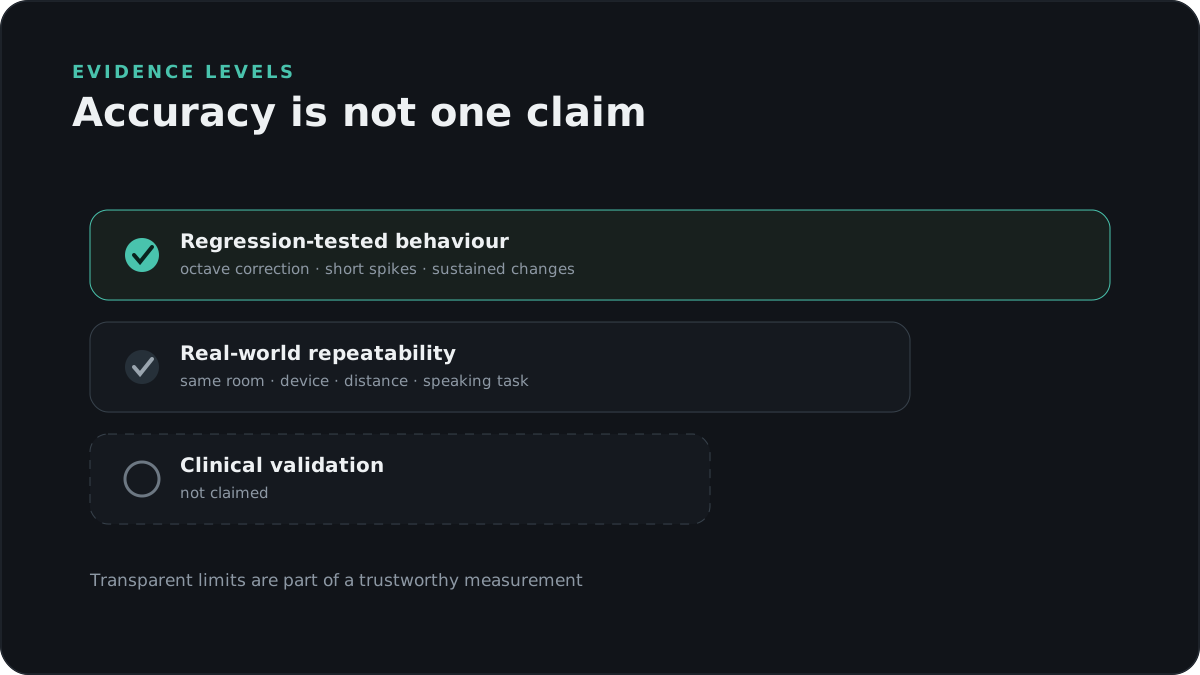
What is currently tested
- Short bracketed octave mistakes are corrected without dragging later speech into the wrong octave.
- Brief low-confidence local spikes can be removed.
- Clear short phrases and sustained register changes are preserved.
- Mobile layout regressions and localization completeness have automated checks.
Likely sources of error
- Octave errors
- A harmonic may be mistaken for the fundamental or vice versa.
- Noise
- Fans, music, other voices, clicks, and reverberation can produce false candidates.
- Vocal quality
- Breathy, creaky, rough, or rapidly changing phonation can reduce detector confidence.
- Hardware
- Microphones and browser audio paths vary by device.
How to check repeatability
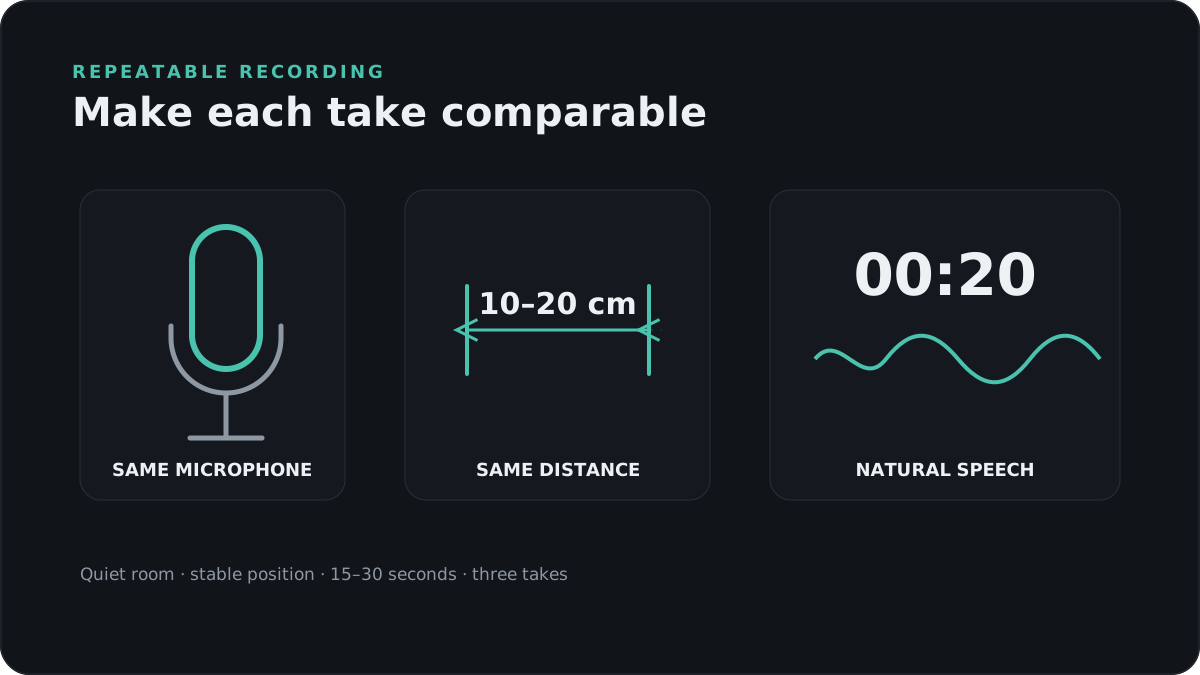
Use the same device, room, passage, distance, and speaking task. Record three samples and compare their medians and contours. A result that changes dramatically under matched conditions deserves inspection rather than averaging without explanation.
What VoiceScope does not claim
The tool does not diagnose vocal disorders, determine gender, score attractiveness, or estimate a complete singing range from ordinary speech. It also does not claim to be more accurate than another product without a shared reference dataset.
Planned benchmark
A useful next validation step is a public set of clean tones, synthetic speech-like signals, and labelled human-voice recordings with expected F0. Results should report gross pitch error, octave error rate, voiced/unvoiced mistakes, and device repeatability. Until that exists, the documented algorithm and inspectable contour are evidence of transparency—not clinical validation.